Call a Clinic
 Find a Location
 Find a Dentist
 Pay My Bill
 Patient Resources
 Dental Services
 Insurance & Financing
 Family Owned
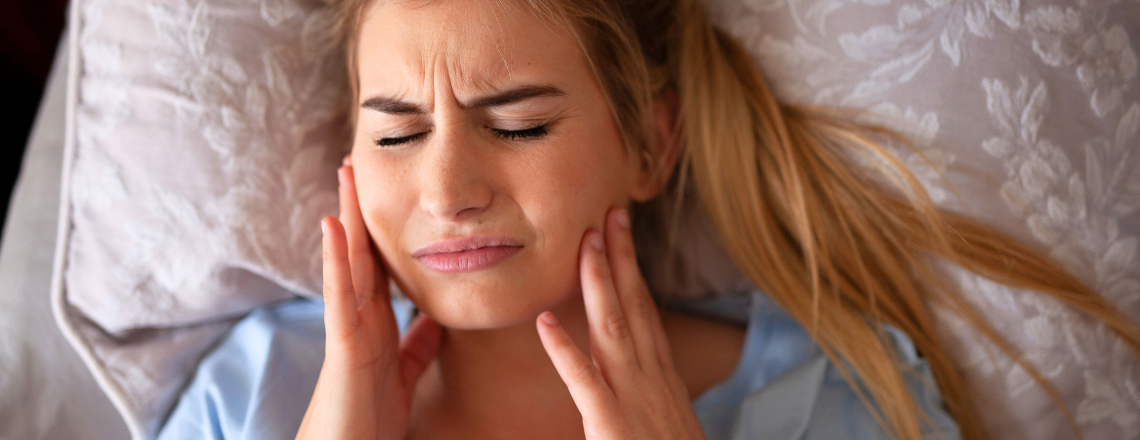
Teeth Grinding and Bruxism
By: Dental Associates
Bruxism is the medical term for teeth grinding and/or clenching of the teeth. Over time, bruxism can wear down tooth enamel, which can make teeth sensitive to food, drink, and teeth brushing. In addition, bruxism can lead to TMJ problems, jaw muscle pain, chipping of teeth, and damage of restorative dental work. People who grind their teeth often do so at nighttime and are usually not aware that they are grinding their teeth. Most of the time, your dentist will notice signs of bruxism during your routine dental exam.
If you or someone you know grinds their teeth, read on to learn the causes and symptoms of bruxism, and how to prevent it.
Teeth Grinding Causes
The main causes of teeth grinding are stress and anxiety. If you are stressed or anxious during the day, you are more likely to experience the effects of the stress at night too, which can cause jaw clenching and teeth grinding during sleep.
However, teeth grinding can also be attributed to undiagnosed sleep apnea (a condition in which your breathing is paused or irregular while sleeping). Whether a night guard is necessary for your sleep apnea depends on the severity of your condition. For patients with undiagnosed sleep apnea, wearing a night guard without doing a proper sleep study may not be advisable because it can make your condition worse. So, consulting with your physician is also important; your physician may recommend a sleep study to help diagnose and determine the best course of action for treating sleep apnea. I recommend consulting with your dentist to see if a night guard is right for you.
Teeth Grinding Signs and Symptoms
Here are some common symptoms caused by teeth grinding:
- A grinding sound at nighttime, which can sometimes be detected by a partner
- A headache upon waking
- Pain or tightness with jaw muscles
- Teeth that are worn down, appear flattened, or are chipped
- The breaking down of restorative dental work such as crowns or fillings
How to Prevent Teeth Grinding Damage
The best way to prevent damage to teeth from bruxism is the use of a professionally-made custom mouth guard. A mouth guard can help protect your teeth from grinding at night and will keep your enamel healthy for longer—not to mention, you may have fewer headaches when you wake up in the morning, since the friction will be reduced! Talk to your dentist if you or a family member is known to grind their teeth or clench their jaw, and consult with your dentist to see if a night guard is right for you.