Dental Associates Blog

Our Experts. Your Oral Health

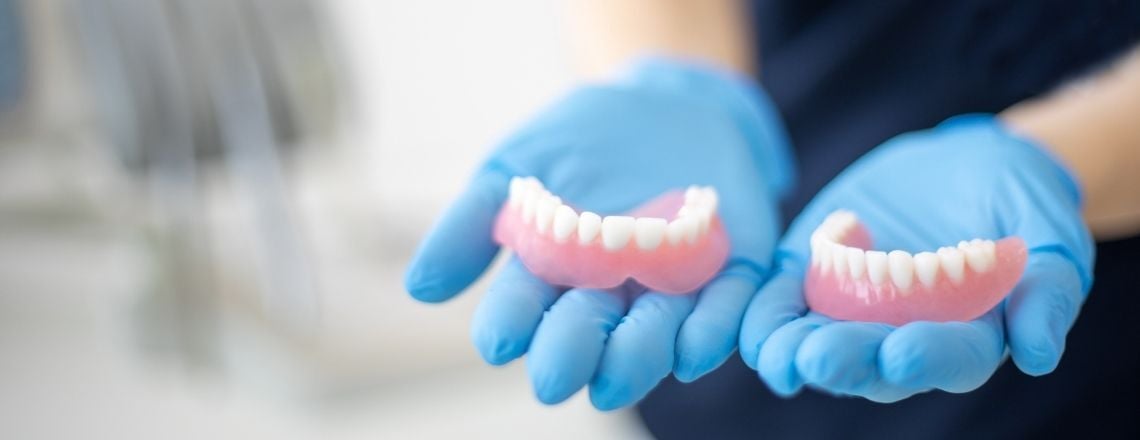
A dental professional wearing blue gloves holds a complete set of upper and lower dentures.
Oct 16
Digital Dentures

Into the Digital Age: Digital Dentures According to the National Institute of Dental and Craniofacial Research, around 24% of people ages 65-74 and 31% of people over the age of 75 are edentulous, and thus require replacement of all their teeth.* For many, they choose to replace their teeth dentures. You may have ideas of what a denture is and is not and what the process is for creating and delivering a denture. Some patients struggle with adapting to dentures while others have worn the same pair for over 30 years. However, whenever a new pair is needed, both groups know that it takes a lot of steps to get the final prosthesis. Digital dentures are the future of creating a more predictable denture with fewer steps, saving you time between appointments and resulting in a better product! What Are Digital Dentures? Digital dentures are dentures fabricated with an entirely digital process using a wide array of data. By using photographs, digital scans of the impressions/bite, and a 3D smartphone facial scan, we can merge that information with a proposed denture design to produce a denture that is easily adjusted by a computer. Advantages of Digital Dentures Fewer Appointments Conventional dentures require five appointments: Preliminary impression Final (more detailed) impression Wax bite Wax tooth esthetic try-in Final delivery On the other hand, digital dentures can be made in 2-3 appointments depending on the situation. The increased efficiency with a digital approach means fewer visits to the dentist. This can be especially beneficial for those who have difficulty getting to and from our clinic, including patients who are wheelchair-bound, in nursing facilities, or those just seeking to replace their teeth faster. Digital dentures solutions can also be used to reproduce certain aspects of your current denture set. A reline of the old dentures along with a scan of the denture itself can be used to duplicate a new, better fitting denture that duplicates the same esthetics or improves on the old set. Receive More Predictable Results Dentures are a scientific and artistic prosthesis. The traditional denture fabrication process puts pressure on the dentist to incorporate several pieces of data via a partially subjective viewpoint using research-backed processes as a guide. This can lead to the same denture being made differently by different dentists. Digital dentures reduce this by extracting and using a wide arrange of data. Through photos, digital scans and 3D imaging, we can combine this information with a proposed denture design to produce a denture that is easily adjusted by a computer. Digital dentures also offer a wider array of tooth shape selection compared to the set molds of denture tooth companies, which leads to a more customized product. Achieve a Better Dentures Fit Conventional dentures are made by converting wax into acrylic. This process can lead to shrinkage of the denture ever so slightly that the denture may not be as retentive or may require additional adjustments at the time of delivery. Additionally, not all the acrylic fully cures in some of the processes depending on how it is handled, which can lead to a residual chemical called monomer that is irritating to some patients. Digital dentures are milled from fully processed pucks of acrylic, which means they have superior strength and reduced residual monomer. The accuracy of these milled dentures is higher too. Digital dentures can also be 3D printed, which reduces the amount of waste produced. Creates a Digital Library for Remakes One of the most exciting aspects of digital dentistry is the ability to reproduce dentures without the need for additional appointments. With the conventional denture technique, if you lost your denture it would take five appointments and nearly four to six weeks to get your denture completed. For digital dentures, the digital files are saved on the computer and can be remilled or reprinted in as little as one appointment. Are Digital Dentures the Right Option for Me? Digital denture solutions come in many varieties. At Dental Associates, we pride ourselves in offering unique treatment plans to patients. Ask your provider how a digital denture solution will work for you! *Tooth Loss in Seniors

Learn more →
Wooden jaw model representing tooth loss and extraction on a pink background.
Sep 2
What to Do If Your Child Chips, Cracks, Or Knocks Out A Tooth

Knowing what to do (and what not to do) during a dental emergency will prepare you in case your child chips, cracks, or knocks out a tooth. It’s important to know that no matter what the dental injury is or how small it may appear, your child will need to be evaluated by a dentist to ensure that there is no additional damage or injuries to the mouth, surrounding teeth, and jaw. Sometimes the child may not even notice or be in pain, but other times if a large part of the tooth has been chipped or if the tooth is knocked out altogether, it can be painful for them. Steps if a Child Chips or Breaks a Tooth If your child cracks, chips, or breaks a tooth, follow these steps: Contact your child's dentist right away. Rinse their mouth with water. Put a cold compress on the face to reduce swelling. If possible, bring the tooth fragment with you to the dentist. If a baby tooth is knocked out, never try to replant it, as it could cause damage to the permanent tooth behind it and the tooth. Instead, schedule a visit to your pediatric dentist as soon as possible and bring the tooth with if you are able. However, if the knocked-out tooth is a permanent tooth, you should rinse it off carefully, replace it in the mouth as quickly as possible, and see your dentist immediately. How to Temporarily Replant a Tooth These instructions should only be used if the tooth knocked out is a permanent tooth. Find the tooth and pick it up by the crown (the widest part of the tooth). Avoid touching the root of the tooth. If a tooth is dirty, gently rinse the tooth in cold water for 10 seconds. Do not scrub it or use soap. Gently place the tooth back in its socket and have your child bite down gently on a clean piece of gauze, handkerchief, or washcloth. If you can't replant the tooth, place it in a clean container and keep it moist until you can get to a dentist. The best liquid to put a tooth in is a special tooth-preservation product called Save-A-Tooth. If you’re unable to get a hold of this product, use cold milk, saliva, a saline solution, or water. Seek dental care immediately. The best chance for tooth survival is to replant it or place it in one of the above liquids within about five minutes, so you must act fast and be prepared in the case your child knocks out a permanent tooth. Though you can't prevent every stumble, fall, or sports injury, child-proofing your home and having your child wear a mouth guard when playing sports can go a long way in avoiding dental injuries. If you have questions or concerns about your child’s teeth, especially when playing sports, request an appointment below and our caring dental teams can help!

Learn more →


hands holding ribbon symbolizing oral cancer
Jul 31
Oral Cancer Signs

According to the American Cancer Society, an estimated 53,260 people will get oral cancer in 2020 and 10,750 people will die from these cancers. Oral cancer has a high survival rate when caught early, which is why Dental Associates dentists pledge to monitor our patients for signs of oral cancer at each routine exam. Oral Cancer Exams With each routine dental exam, we perform a soft tissue exam as well to look for any sign of oral cancer. During these soft tissue exams, we feel for lumps or abnormalities that could be a sign of something more. In between exams, and especially if you’re a high-risk patient (those who have a family history of oral cancer, or are a smoker or chew tobacco), you can also perform self-exams to check yourself for signs of oral cancer. To do this, simply use a light to look around your mouth and monitor for any of the below symptoms. You can also feel around your jawbone and neck area for any abnormal lumps. If you do find an area of concern, make an appointment with your dentist immediately to have it examined further. Oral Cancer Signs and Symptoms Signs of oral cancer can include the following: White or gray patches under and around the tongue White or gray patches on the inside of the cheek and near the throat Growths on the lips, gums, and roof of the mouth Lumps around the jawbone and neck area Monitoring for Oral Cancer A bit ago, I was performing an exam on a patient and detected signs of oral cancer. The patient was diagnosed with squamous cell carcinoma, but luckily we caught it early and I was able to send them to our oral surgeon for care and the patient recovered fully. This is just one example of how examining our patients regularly for signs and symptoms of oral cancer can help keep them healthy and save lives down the road. It’s also important to share your family medical history with your dentist because those with a family history of oral cancers are at higher risk themselves. You may also be at higher risk if you’re a smoker or chew tobacco. By seeing your dentist for regular exams and self-monitoring between appointments, you can help keep yourself safe and we can catch oral cancer before it becomes too serious. If it’s been a while since you’ve had a dental exam, schedule an appointment with one of our teams below!

Learn more →